
Peotone Police Chief Uses Grants to Build Comprehensive Camera Network
By Andrea Arens
Village now has more license plate readers than neighboring communities
Peotone Police Chief David DeMik has transformed the village’s surveillance capabilities over the past few years, building one of the most comprehensive camera networks in the area through strategic grant funding.
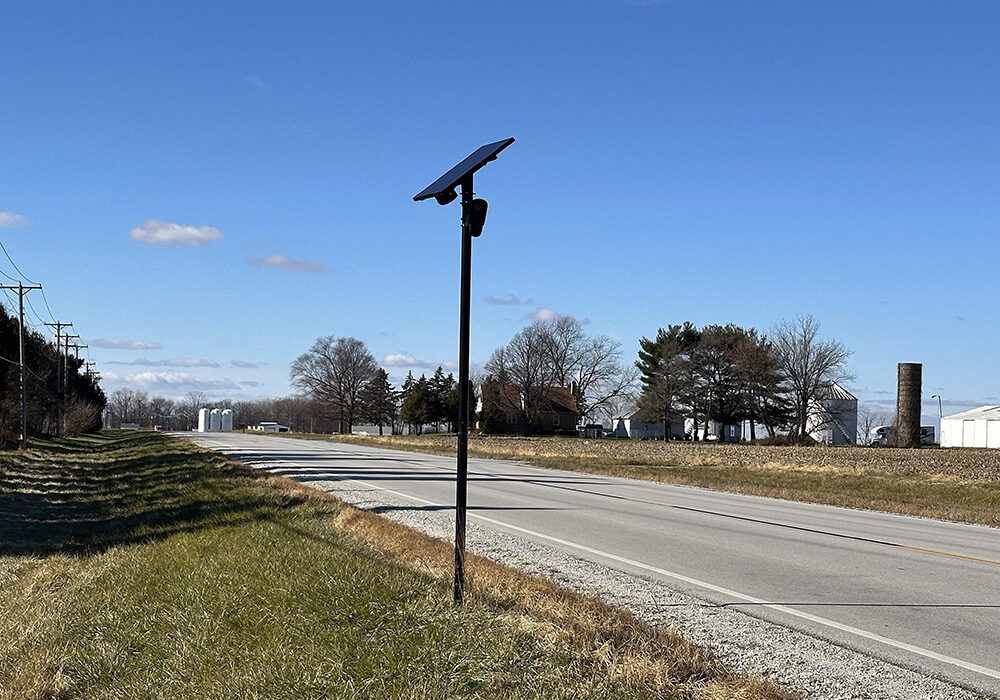
The Peotone Village Board unanimously approved agreements Nov. 17 to add more license plate reading cameras, bringing the total to 16 units — more than neighboring Manteno (6), Beecher (10), or Monee (10).
The latest expansion, funded by a Will County opioid grant, will cover costs for two years at $23,550 the first year and $22,550 the second year. The cameras will be placed on Will County highways within village limits through renewed partnerships with the county and Flock Group Inc.
From two cameras to complete coverage
When DeMik joined the Peotone Police Department, the village had only two cameras without live-feed capability. Today, the system includes nine license plate readers and seven live-feed cameras positioned around the town’s perimeter with three units downtown.
“There’s complete coverage of the town,” DeMik said. “No one can get in and out of town without the police knowing.”
The transformation represents a significant upgrade in public safety technology for the small community. The cameras provide real-time alerts to officers — first in patrol cars, then on their phones, then by email — all within 15 seconds of detecting a flagged vehicle.
Advanced technology features
The Flock system offers sophisticated capabilities beyond basic license plate reading. Officers can create “hotlists” of vehicles they’re seeking and identify cars by specific features, including bumper stickers or other distinctive markings.
The department also gains access to 9,023 other cameras for investigative purposes, significantly expanding their reach beyond village boundaries.
Images are accessible through a command hub at the police station and on laptops in patrol cars, giving officers immediate access to surveillance data while on duty.
DeMik said he’s working toward what he calls “outstanding” coverage by adding live cameras with pan features that can automatically zoom in on suspicious activity and provide alerts within 10 seconds.
Grant funding success
The camera expansion represents just one part of DeMik’s broader grant-writing success. He has secured funding for dash cameras, body cameras, data storage systems and an e-bike. He’s submitted a grant for a Polaris side-by-side, and he’s also researching grants for electric vehicles including an e-truck for public works, and e-squad car.
“It’s the easiest way to get anything,” DeMik said of grant writing.
Each camera costs the village $3,000 annually for data access, though the village doesn’t own the actual equipment. The majority of these costs have been covered through various grants, minimizing the financial impact on village taxpayers.
Community benefits
The camera network serves both town businesses and rural residents by tracking suspicious vehicles and providing valuable investigative information, according to DeMik.
Local businesses and homeowners associations can also contact the police department about purchasing camera access for their specific areas.
“The cameras help businesses in town, but they help rural residents as well by allowing the police department to track where a suspicious vehicle has been and where it’s going,” DeMik explained.
Crime deterrent effect
Beyond their investigative value, the cameras serve as a visible crime deterrent. DeMik believes criminals will avoid communities with comprehensive surveillance systems.
“Why go to a town where they can identify you or your car, when you can go to a town where they can’t?” he said.
The chief noted that the Village may receive additional free units based on the village’s ongoing relationship with Flock Group, which has provided discounts due to their previous work together.
Looking ahead
DeMik’s grant-writing efforts continue as he seeks additional funding for public safety improvements. The camera network represents his vision of using available resources to maximize protection for Peotone residents and businesses.
“We might actually get even another free camera that may be coming,” DeMik said at the board meeting, noting the ongoing partnership benefits.
The comprehensive surveillance system positions Peotone as a leader in small-town public safety technology while maintaining fiscal responsibility through grant funding.






Mostly Sunny