
District 207U Holds Public Hearing on Potential Closure of Peotone Intermediate Center
By Andrea Arens
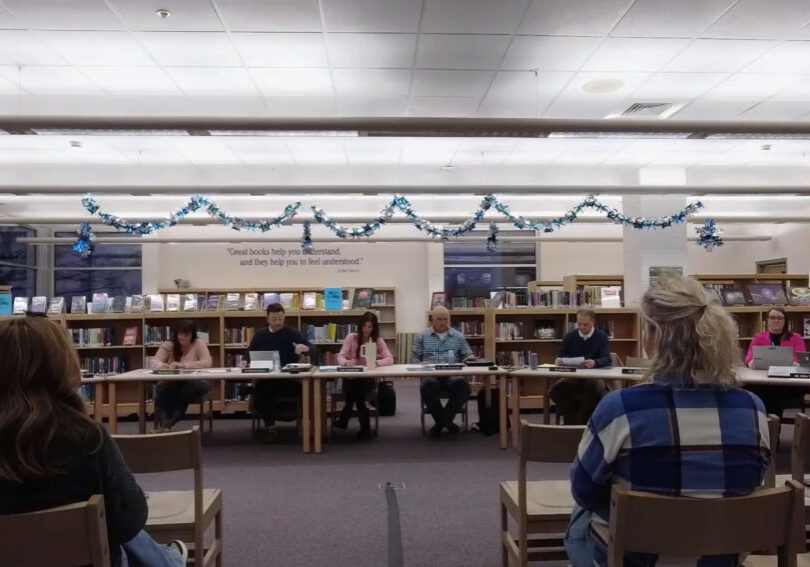
Nearly 40 residents attended a public hearing on February 13 as Peotone Community Unit School District 207U considers closing the Peotone Intermediate Center (PIC) at the end of the 2025–2026 school year.
The district is weighing the closure due to safety concerns tied to Will County’s planned widening of Manhattan-Monee Road, which runs adjacent to the school, as well as ongoing financial challenges, including a projected $4.8 million budget deficit.
The hearing, held at Peotone High School, was one of three scheduled to gather public input. Board policy allowed each registered speaker five minutes to address the board.
While speakers varied in tone and emphasis, the majority who addressed the board expressed support for closing PIC — though many urged district leaders to pair the decision with a clear long-term strategic plan.
Safety and Financial Pressures
Several residents cited the upcoming road construction as a significant concern.
“I agree that closing PIC is the right thing to do,” said Nick Chapman, referencing the Manhattan-Monee Road expansion. “We also know this campus no longer serves the purpose it was built to.”
Others pointed to the district’s financial situation. Chapman referenced figures from a recent architectural feasibility study, noting that over the next five years, the district faces approximately $20 million in building maintenance costs across its remaining schools.
“The longer we wait to put an effective solution in place — and think about the revenue side of this equation — we’re only putting ourselves in further peril,” he said.
Former discussions about closing PIC date back to 2018, mentioned by resident Jim Bowden, when a cost-saving proposal estimated roughly $1 million in potential savings. At that time, the school remained open and a subsequent referendum failed in 2020.
Bowden said he supported the closure and urged the board to maximize the value of the PIC property if it is sold, noting its location along a growing transportation corridor.
“When PIC is closed, the district will have a large, well-located site,” Bowen said. “Don’t repeat past mistakes” regarding property sales.
Concerns About Long-Term Planning
While many speakers supported closure in principle, several emphasized the need for a comprehensive long-term plan beyond short-term consolidation.
Julie Chapman, who said she has worked in human resources across multiple industries, told the board she has “never seen a successful organization operate without a strategic long-term plan.”
“If the closure moves forward, we can all acknowledge that this is a result of reactive decision-making,” she said. “It’s now your responsibility to ensure there is thoughtful strategy in place going forward.”
Chapman called on the board and superintendent to outline a two-, three-, five-, and 10-year roadmap addressing facilities, finances, staffing, academics, and extracurricular programming.
Parent Victoria Theodossopoulos, who has three children currently enrolled and two more who will attend in the future, described herself as “indifferent to the closing of PIC” but supportive of the board’s recent transparency.
“I am placing trust in the board and the district leadership team to make the best decisions,” she said, while urging improved communication as changes unfold. “Leaving your community in the dark has become a breeding ground for rumors and misinformation.”
Theodossopoulos also stressed that safety may be a leading factor in the proposed closure, but “we also must be comfortable speaking openly that the budget challenges are a large piece as well.”
Questions About Grade Configuration
Some parents raised concerns about where students — particularly fifth graders — would be placed if PIC closes.
Eric Wright, parent of a rising fifth grader, said he supports closing the school but does not support housing fifth grade at the junior high. He suggested the district explore temporary mobile classrooms as an alternative to costly reconfiguration projects until a long-term plan is finalized.
“We should avoid making major interim moves that may conflict with future direction,” Wright said.
Others echoed concerns about potential disruptions, including transportation logistics, start and dismissal times, lunch arrangements, recess accommodations, and developmental considerations for fourth and fifth graders.
Community Support for Current Board
Several speakers expressed confidence in the current board’s approach, contrasting it with past leadership.
Kelly Sinka, a parent of a kindergartener and second grader, said she did not support a previous referendum but would feel comfortable supporting this board financially.
“I trust your decisions. I trust your opinions. I respect you guys,” Singa said. “I will openly support this decision and defend it.”
Board members encouraged residents to submit questions through a Google form available on the district’s website. Speakers urged the board and district administration to post questions and answers publicly. Officials acknowledged there are still unknowns but pledged continued transparency and weekly review of submitted concerns.
“This is the most people I’ve seen showing up at a meeting,” board member Bob Janeliunas said while closing the hearing. “If we’re going to do anything as a board, the community has to be involved.”
The board is expected to vote in the coming weeks on accepting a feasibility study prepared by architectural firm Wight & Company, which outlines consolidation scenarios and facility needs.
Additional public hearings are scheduled, both on Wednesday February 18 and Saturday February 21, before the board makes a final decision on the future of Peotone Intermediate Center.






Scattered Showers And Thunderstorms then Mostly Sunny