
Green Garden Township Board Opposes Earthrise Solar Project, Begins Exploring Incorporation
By Andrea Arens
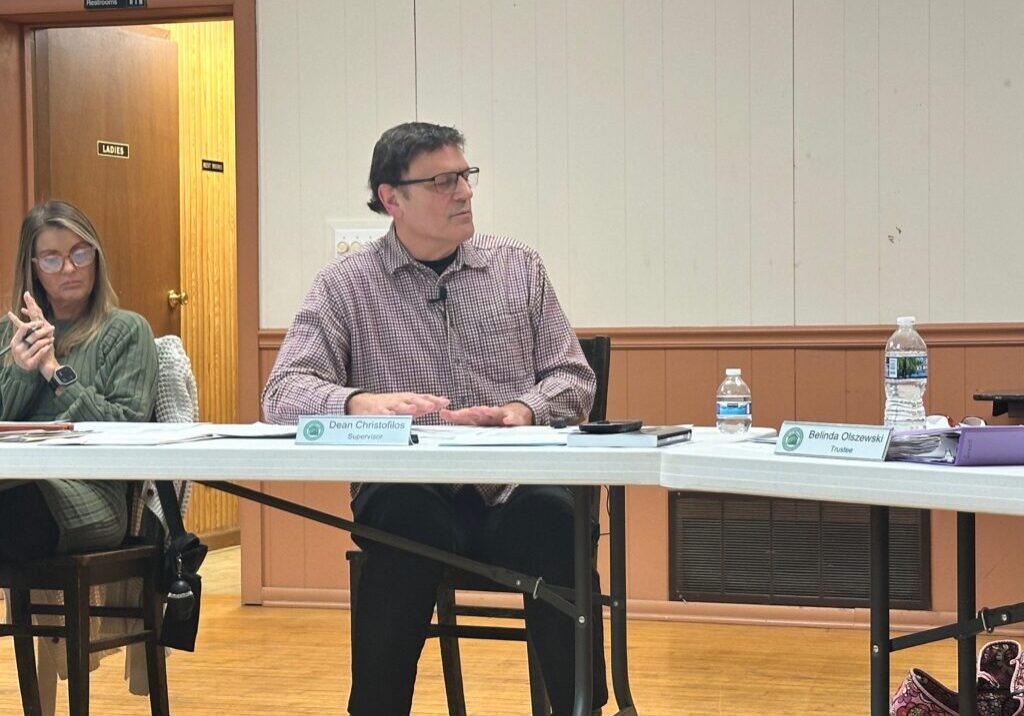
Green Garden Township officials voted March 9 to formally oppose the proposed Earthrise solar project and begin exploring whether incorporating the township into a municipality or rural district could help residents gain greater control over land use decisions.
The actions came during a lengthy township board meeting that drew residents concerned about large-scale solar development, taxes, and the future of the township’s rural character.
Major Solar Proposal Draws Opposition
Thomas Becker, chairman of the Green Garden Township Watershed Committee, told board members that the Earthrise project represents one of the largest developments the area has faced.
According to Becker, the proposed solar facility would cover roughly 6,000 acres across about 100 parcels in Green Garden, Manhattan and Wilton townships.
“This is the biggest hearing we will ever have,” Becker said.
Becker urged residents to attend a Will County Land Use public hearing scheduled for March 30 at 5:30 p.m. at the Renaissance Center in Joliet, with a second session planned for March 31.
“If you have objections or concerns, that is the meeting to speak,” he said.
Becker also criticized the Will County Board for eliminating additional public hearings previously held for major land-use proposals, saying it limits opportunities for residents to voice concerns.
Three-Part Strategy Proposed
Becker said the Watershed Committee has developed a three-part strategy to fight the project:
- Oppose the development during the county zoning process
- Pursue litigation if the project is approved
- Explore incorporation to gain local land-use authority
If the zoning process fails to stop the project, Becker said the group is prepared to file lawsuits related to environmental impacts and watershed protections.
“If we don’t win at zoning, the next step is litigation,” Becker said. “We already have plaintiffs prepared.”
Incorporation Raised as Long-Term Strategy
Much of the meeting focused on whether incorporating Green Garden Township could provide residents greater control over zoning and development.
Becker said the township consists of 36 land sections, and about half already contain dormant solar leases that could eventually be activated.
“Our goal is to save 22,800 acres and keep industrial development in one section,” he said. “The rest would remain rural.”
He argued incorporation could allow residents to establish their own zoning rules and prevent industrial development from spreading across farmland.
Becker described the effort as a response to increasing pressure from solar companies, battery storage developers and data centers seeking land in rural areas.
“These corporations are coming to rural areas,” he said. “If we do nothing, they will continue to pick off these areas one by one.”
Homer Glen Official Shares Experience
Township officials invited Kevin Hofmeister of Homer Glen to speak about that community’s incorporation experience.
Homer Glen incorporated in the late 1990s largely to prevent high-density housing development, Hofmeister said.
“New Lenox, Lemont and other towns were trying to annex land and increase density,” he said. “Incorporation allowed us to control our own destiny.”
Hofmeister said the process required three referendums before voters approved it, but ultimately allowed the village to establish its own planning policies.
He also said incorporation does not automatically lead to large tax increases.
“The village itself has no property tax,” Hofmeister said, noting that Homer Glen instead relies on revenue sources such as sales taxes and a small local gas tax implemented years later.
Municipalities can also contract services, such as police protection, instead of building departments immediately, he said.
“We contract with the Will County Sheriff’s Office,” Hofmeister said. “You can control your costs depending on what services you decide to provide.”
Tax Questions Dominate Discussion
Despite the presentation, several officials and residents expressed concerns about the potential financial impact of incorporation.
Township Highway Commissioner Jim Hilliard noted that Green Garden Township currently has very little commercial or industrial tax base, meaning most property tax revenue comes from residents.
“Unless that were to change, I don’t see how taxes could not go up,” Hilliard said.
He also warned that incorporated communities often have more taxing bodies listed on property tax bills, which can lead to higher taxes.
Becker said those questions would be studied as part of the research process.
“The issue here is premature,” Becker said. “We are months away from even presenting the information that would answer those questions.”
Residents Call for More Information
Some residents said they needed significantly more information before supporting incorporation.
Resident Mark Sarkeesian said he arrived at the meeting opposed to the idea but left with more questions than answers.
“I walked through the door tonight thinking there’s no way I would want to incorporate because the taxes are going to go higher,” Sarkeesian said. “Now I realize I have way more questions.”
Sarkeesian suggested the township hold a separate meeting focused entirely on incorporation so residents could better understand the differences between townships, villages and municipalities.
Others questioned whether incorporation would actually provide stronger authority to oppose solar development under recent Illinois renewable energy laws.
Becker argued municipalities still retain the ability to control where solar facilities are located through zoning, even if they cannot ban them outright.
“Rural District” Concept Introduced
During the meeting, Becker also discussed the possibility of creating a “rural district” model if incorporation moves forward.
The concept would aim to maintain the township’s existing rural character rather than transform it into a suburban-style municipality.
“We have lived our lives out here wishing to be left alone,” Becker said. “The rural district is to keep things exactly as they are — so people can have their chickens, goats and horses.”
Under the concept, most of the township would remain rural residential land while limiting industrial development to a small designated area.
Concerns Raised About Process
Some residents also questioned whether the Watershed Committee should lead research into incorporation.
Township Collector Michael Flanagan argued that appointing individuals already actively opposing solar projects could create a conflict of interest and reduce public confidence in the process.
The resident proposed forming a more independent committee representing a broader range of residents and experts.
Becker rejected the criticism, noting the Watershed Committee has worked on environmental and land-use issues in the township for more than two decades.
“We are not here to harm anyone,” Becker said. “We are here to help preserve this area.”
Board Votes to Oppose Earthrise Project
Later in the meeting, the township board approved Resolution 2026-005, formally opposing the Earthrise solar project.
The resolution states the project may negatively impact farmland, rural character, watershed systems and the township’s comprehensive land-use plan.
Board members agreed to change the wording from “will” to “may” before approving the resolution, pending review by the township attorney.
Officials said they hope the resolution will be submitted to Will County before the March 30 public hearing.
Board Also Approves Incorporation Study
The board also approved Resolution 2026-006, directing the Watershed Committee to begin gathering information about the feasibility of incorporation.
Officials emphasized that the resolution does not initiate incorporation, but simply begins a research process that could take several months.
Any incorporation proposal would ultimately require approval by Green Garden Township residents through a referendum.
“This is the start of the process,” township officials said during the meeting.
Other Township Business
In other business, officials discussed road maintenance projects, including the upcoming Scheer Road Bridge construction project, which was awarded for approximately $1.6 million, lower than initial estimates.
Township officials also announced plans to mail postcards to residents notifying them about the upcoming county hearing on the Earthrise proposal.
Residents were encouraged to attend the hearings scheduled for March 30 and March 31 in Joliet.
What Happens Next
For now, township officials said the immediate focus remains the upcoming county hearing.
“If there’s one meeting to attend,” Becker told residents, “this is it.”


Mostly Clear