
Will County Land Use Committee Advances One Earthrise Solar Project, Rejects Another Amid Contentious Meeting
By Andrea Arens
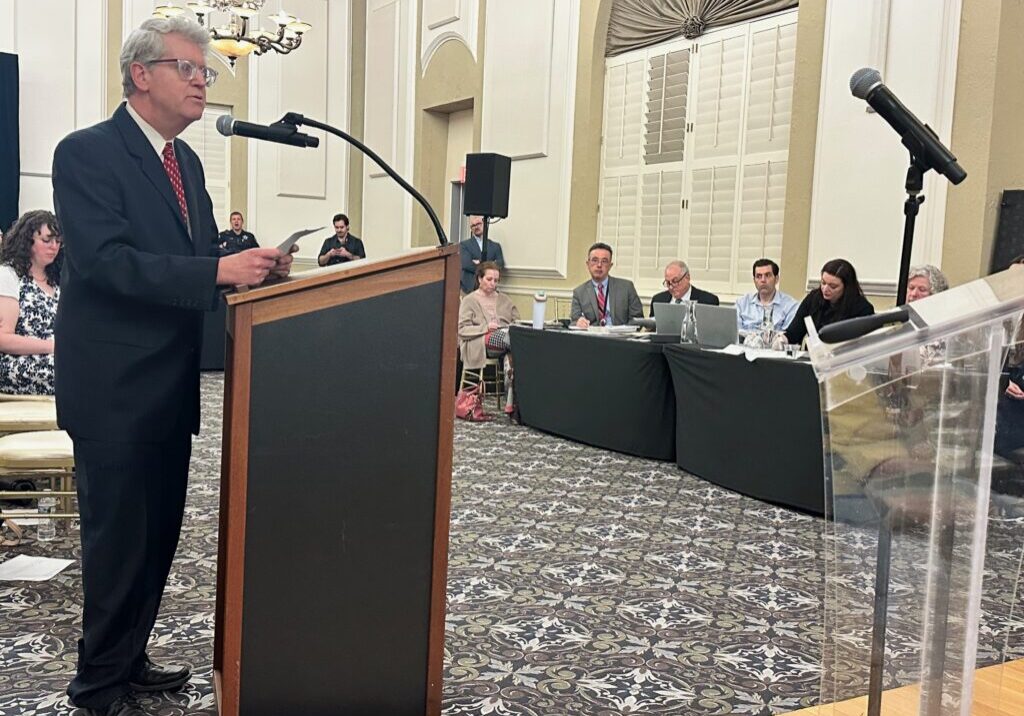
JOLIET — A divided Will County Land Use and Development Committee took sharply different positions on two large-scale solar projects Thursday, advancing the Plum Creek proposal while rejecting the much larger “Pride of the Prairie” development after a tense and at times contentious meeting.
The committee voted 4–2 to approve the 2,250-acre Plum Creek solar project, while the 6,099-acre Pride of the Prairie project failed on a split vote, reflecting growing concerns over the scale, process, and local impact of utility-scale solar development in the county.
Frustration Over Process and Timing
Much of the meeting centered not just on the projects themselves, but on the process leading up to the vote.
Board member Judy Ogalla repeatedly raised concerns about timing, noting that several members were unavailable and that meeting minutes from prior hearings were not yet ready for review.
“Why put it to public hearing right before this committee?” Ogalla asked, questioning why the proposals were moving forward so quickly.
County staff maintained the timeline was driven by statutory requirements, noting that a vote must occur within 30 days. Still, several members echoed concerns.
“What’s the rush?” asked board member Raquel Mitchell, while Julie Berkowicz, board member in attendance but not part of the committee, added, “Why can’t a board member ask a question and get an answer?”
At one point, Ogalla suggested members abstain from voting altogether, arguing that “no one knows what happened,” a reflection of broader unease about the volume of information and pace of review.
Legal and Environmental Concerns Raised
Opponents again pressed arguments that the applications were incomplete and the process flawed.
Attorney Steven Becker told the committee he was not allowed to cross-examine Earthrise representatives during earlier hearings, calling it a violation of due process. Ogalla attempted to allow Becker additional time to speak, but the motion failed on a 4–2 vote.
Thomas Becker of the Green Garden Watershed Committee reiterated concerns that Earthrise has not completed necessary environmental reviews, including wetland delineations and protections for local waterways.
Other speakers pointed to potential impacts on endangered species, including the short-eared owl, and questioned how wildlife would navigate fenced-in solar fields.
Local Officials Push Back
Local township leaders and officials delivered some of the strongest opposition.
Green Garden Township Supervisor Dean Christofilos said thousands of acres included in the proposals violate the township’s comprehensive land use plan and warned the township is considering incorporation to gain more control.
Manhattan Township Supervisor James Walsh criticized Earthrise for not working within local solar ordinances.
“It’s like letting a kid loose in a candy store,” Walsh said.
Wilton Township Highway Commissioner Ray Nugent Jr. described repeated difficulties obtaining basic information from the developer.
“I had 42 emails asking for a map and didn’t get one until just recently,” Nugent said. “How can you approve when they don’t know what they’re doing?”
Nugent also pointed to long-term drainage failures from past developments, urging the committee to prioritize residents.
“Do your job, protect the people,” he said. “Time to find our spines and vote no.”
Economic and Land Use Tensions
Debate also highlighted broader tensions between renewable energy development and agricultural preservation.
Board member Judy Ogalla questioned whether the projects would ultimately displace more jobs than they create.
“You’re adding a couple jobs to remove hundreds of jobs in agriculture,” she said.
Board member Daniel Butler in attendance added from the audience that Will County is already on track to lose more farmland than nearly any other county in the nation.
Critics also raised concerns about federal subsidies and lease agreements, with local real estate agent Gregory Clark urging closer scrutiny of contracts tied to the projects.
Others framed the issue in broader terms. Retired Green Garden Township trustee Bill Wagner emphasized, “This is a land use case,” adding, “Let’s not let outside interests destroy what we’ve worked so hard to build in our community.”
Earthrise Response
Earthrise representatives defended their outreach efforts and project design.
“We did our best,” said Rob Kalbouss of Earthrise, responding to criticism that the company had not adequately engaged local communities.
When asked about potential tax abatements and community benefits, Kalbouss described the approach as redistributing value rather than increasing it.
“It’s the same amount of peanut butter, just smearing it to the top of the toast,” he said.
Kalbouss also declined to disclose lease rates offered to landowners.
The company resisted calls to delay the vote, maintaining that its applications complied with county requirements and would not be amended.
Amendments and Votes
Ogalla proposed three amendments to both projects: requiring gravel fire lanes, mandating road use agreements with township road districts before permits are issued, and adding vegetative screening.
The first two conditions passed, while the vegetative screening requirement failed after Earthrise said it could not commit to it.
The committee then split on the two projects.
Plum Creek, a 2,250-acre development, was approved 4–2, with Ogalla and Mitchell voting no.
The larger Pride of the Prairie project, previously recommended for denial by the Planning and Zoning Commission, failed to advance.
Board member Ortiz sharply criticized the proposal, calling it “the most disastrous thing I’ve ever seen.”
The vote ended in a tie, with Newquist, Brooks, and Ortiz voting in favor, and Bullock, Mitchell, and Ogalla opposed. The project will move to the county board next as both votes from the planning and zoning commission and land use committee are advisory votes.
A Divided Path Forward
The contrasting outcomes underscore the county’s ongoing struggle to balance economic development, renewable energy goals, and preservation of its rural character.
Throughout the meeting, one theme remained consistent: concern that the process is moving too quickly for projects of this size and impact.
As debate continues, both projects—particularly the Pride of the Prairie proposal—are likely to remain flashpoints in the broader conversation over land use and energy development in Will County.





Mostly Sunny