
Judge Halts Will County Solar Project Vote, Orders New Hearing Procedures in Earthrise Dispute
By Andrea Arens
WILL COUNTY — A Will County judge has halted action on a controversial large-scale solar project, ruling that nearby residents were denied fundamental due process during public hearings—an outcome that could reshape how solar developments are reviewed across the county.
The April 15 ruling in Burke et al. v. County of Will grants a temporary restraining order (TRO) preventing the county from taking final action on the project until residents are given a meaningful opportunity to participate in the approval process.
The case stems from opposition to a proposed commercial solar facility tied to Earthrise Energy, where adjacent landowners argued they were improperly blocked from cross-examining witnesses and presenting evidence during key hearings.
From Public Frustration to Legal Action
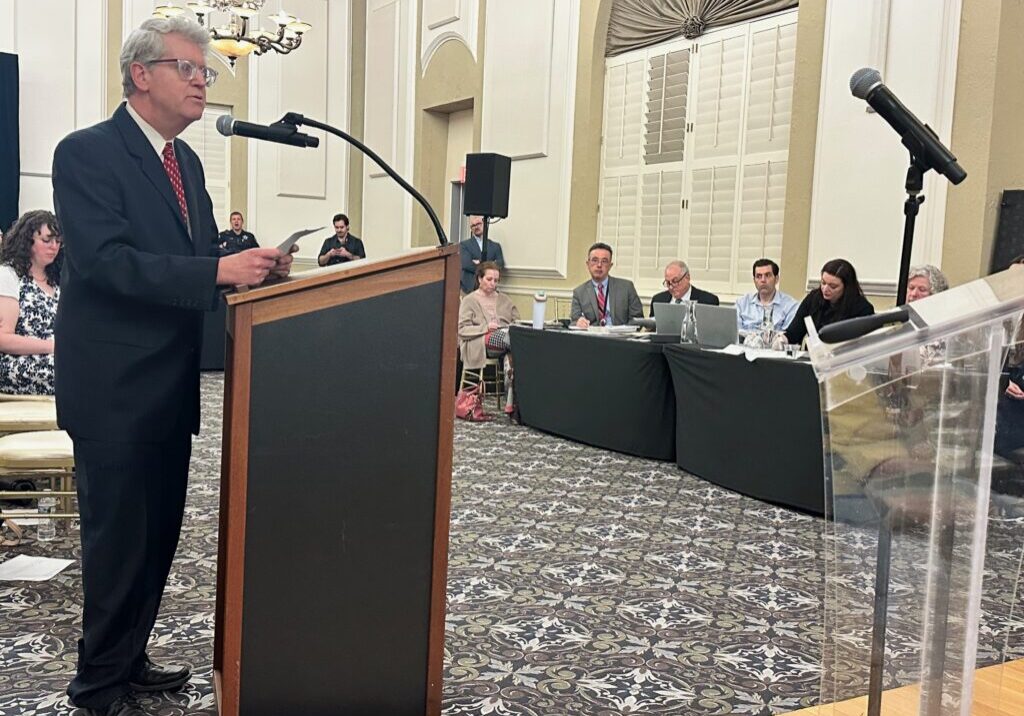
The lawsuit followed contentious Planning and Zoning Commission hearings held March 30–31, where residents were limited to five-minute public comments and could only submit questions to be answered later by the applicant.
Attorneys representing affected landowners objected at the time, arguing the format denied them the ability to directly challenge the developer’s claims—particularly on technical issues like floodplains, wetlands, and site design.
“We have a right to cross-examination,” opponents said during subsequent township meetings. “That right was denied.”
Rather than naming the solar developer as a defendant, plaintiffs targeted Will County itself, alleging the State’s Attorney’s Office improperly restricted participation in violation of established legal standards.
Court: Hearing Process Fell Short of Due Process
In granting the TRO, the court agreed, finding that residents’ rights were violated when they were denied the opportunity to meaningfully test evidence.
“Cross-examination serves a distinct function that cannot be replaced by general public comment,” the judge wrote, citing longstanding Illinois precedent, including Klaeren v. Village of Lisle.
The court determined that:
- Adjacent landowners have a protected right to participate in special use hearings
- Limiting them to brief public comments created a “meaningful risk of error”
- The inability to question witnesses or present evidence undermined the integrity of the process
The judge also rejected the county’s argument that a last-minute offer to allow questioning corrected the issue, noting that plaintiffs had already relied on earlier instructions that cross-examination would not be allowed.
Why the Case Matters: The Record Itself
A key factor in the ruling was the concept of “irreparable harm.” The court found that once a hearing proceeds without proper cross-examination, the record is permanently incomplete.
“The ability to test testimony, challenge credibility, and develop a factual record cannot be recreated later,” the order states.
Because any future appeals would rely on that same record, the court concluded there would be no adequate remedy without immediate intervention.
What Happens Now
The ruling does not cancel the project outright or require the entire process to restart. Instead, the court ordered a limited remedy:
- Will County is barred from taking a final vote on the project
- Plaintiffs must be given a structured opportunity to cross-examine witnesses
- Plaintiffs may present evidence to supplement the record
- The county may rely on the existing hearing record
- No additional general public comment is required
The case is scheduled to return to court April 24.
No Bond Required, Minimal Delay Expected
The court also declined to require plaintiffs to post a bond, noting the lawsuit is aimed at protecting procedural rights rather than financial interests.
The judge characterized the burden on the county as minimal, emphasizing that the order simply pauses the process to ensure fairness.
Broader Implications for Solar Development
The ruling arrives amid growing tension over Illinois’ evolving solar laws, which have significantly limited the ability of local governments to deny renewable energy projects based on concerns like property values or quality of life.
As discussed in local meetings, those traditional arguments have largely been removed from consideration, leaving opponents to focus on technical compliance—particularly whether applications are complete.
That makes procedure critical.
“This case shows that while what you can argue has narrowed, how the hearing is conducted still has to meet constitutional standards,” one local observer noted.
The decision could force Will County—and other jurisdictions—to adopt more formal, court-like procedures in zoning hearings, particularly for large-scale energy projects.
A Temporary Victory, Not the Final Outcome
For residents opposing the project, the ruling represents a significant early win, restoring their ability to directly challenge the proposal’s details.
But it does not resolve the underlying question of whether the solar development will ultimately be approved.
Instead, it ensures that when that decision is made, it will be based on a fuller, more rigorously tested record.
As the case moves forward, both sides now face a revised process—one that, at least for now, places procedural fairness at the center of Will County’s solar debate.





Mostly Sunny